Bangkok, July 7: A significant archaeological discovery in Thailand has shed new light on the ancient cultural and trade links between India and Southeast Asia, with the recovery of two gold rings believed to be around 2,000 years old.
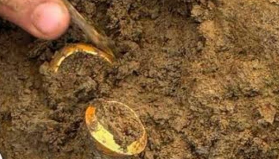
The rings were found during an excavation at the Don Yai Thong archaeological site in Phetchaburi province, along with human remains and other ancient artefacts, according to Thailand’s Fine Arts Department.
One of the gold rings features an inscription in the ancient Brahmi script, an early Indian writing system. Archaeologists have identified the inscription as “pusarakhitasa,” which is believed to refer to protection by Pushya, an auspicious constellation mentioned in Indian astronomical traditions.
The discovery has attracted attention from historians as it offers valuable clues about the movement of people, ideas, and trade across the Indian Ocean region more than two millennia ago.
The second ring, a plain gold band, was also recovered from the same burial site. Experts believe the jewellery may have belonged to an individual from an affluent section of ancient society.
The Don Yai Thong site, located about 130 kilometres southwest of Bangkok, has revealed several important artefacts, including human skeletons, pottery, bronze objects, and gold ornaments, suggesting the presence of an organised ancient settlement and ceremonial burial practices.
Archaeologists said the findings will help researchers better understand early maritime connections and cultural exchanges between the Indian subcontinent and Southeast Asia.
The recovered artefacts are expected to be preserved and later displayed for the public as part of efforts to highlight Thailand’s rich archaeological heritage.