In a city that rushes past its own history every single day, stopping to listen to a ghazal brings a rare stillness. Delhi witnessed a truly beautiful gathering on Saturday, April 4, 2026. The sprawling grounds of Modern School on Barakhamba Road opened their gates for the 57th Shankar Shad Mushaira, and thousands of people from all walks of life poured in. College students sat right next to elderly couples. You could actually see friends huddled together, sharing thermoses of chai, waiting eagerly for the very first words to fall. This stage has held the literary heart of the capital together since 1954. This weekend, it brought the old world charm of Urdu poetry straight into the modern chaos of our lives.
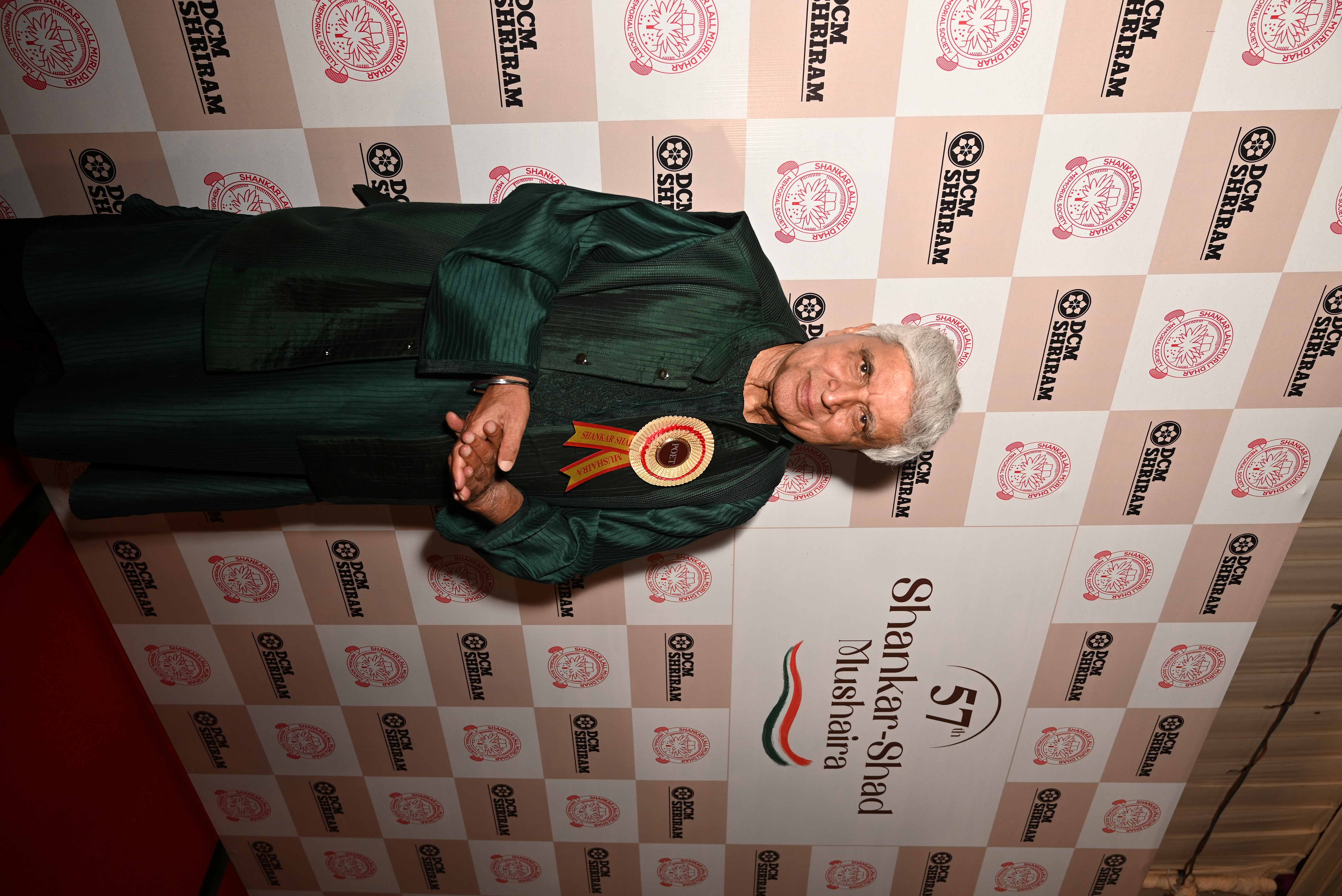
Organised by the Shankar Lall Murli Dhar Memorial Society alongside DCM Shriram Industries Ltd, the evening delivered a Pan-India gathering. Poets travelled all the way from Bareilly, Mumbai, Jodhpur, Kanpur, and Hyderabad to reach the capital. They brought their distinct regional dialects to the stage but shared the exact same human emotions of love, longing, and heartbreak. Heavyweights like the legendary Javed Akhtar and Prof. Waseem Barelvi shared the spotlight with a new guard of storytellers. The audience listened with rapt attention as veterans like Sheen Kaaf Nizam, Rajesh Reddy, and Shakeel Azmi took the mic. They were followed by the raw energy of Charan Singh Bashar, Zubair Ali Tabish, and young voices like Hina Haider Rizvi.
This platform served a purpose far beyond simple weekend entertainment. Prof Waseem Barelvi captured the emotional weight of the gathering beautifully after his set. “A ghazal leaves the poet the very moment it is spoken,” he shared with the audience. “It then belongs to the person in the crowd who hears it and suddenly realises they are no longer alone in their grief. That connection is the magic we brought to Delhi tonight. We gave pain a beautiful, dignified voice.” You could literally feel the crowd collectively hold its breath during his recitation. People nodded slowly, and some wiped away quiet tears, completely absorbed in the shared vulnerability of the moment.
Shri Madhav Bansidhar Shriram, Chairman of the Society and Managing Director of DCM Shriram Industries Ltd, looked out at the massive crowd and spoke about the deep need for such gatherings. “We live in times where people hear but rarely listen,” he reflected. “This mushaira offered a true sanctuary for the tired mind tonight. When thousands sat together under the night sky, hanging on to every single syllable, we all realised that poetry remains the ultimate unifier. We hold on to this tradition because our souls desperately need this quiet, human connection.”
The 2026 edition found its true heart in how it closed the gap between the masters of the craft and the quiet dreamers sitting in the crowd. The Shankar Shad Shayari Contest acted as a bridge for those who usually keep their poetry hidden in the pages of private journals. It gave them a rare chance to bring their raw emotions onto a stage that carries so much weight and history. Age was never treated as a barrier here. The organisers made sure it was a pan age contest, proving that a deep thought or a broken heart does not have a birth date. This open invitation brought in a massive flood of over 2000 entries. Out of all those voices, three winners were eventually chosen: Shyam Kashyap Bechin, Satyendra Bharill, and Chand Kakralvi Khan.
Javed Akhtar delivered a highly emotional message directly to the contest winners and the young poets finding their voice. “To the young minds writing today, I want to say this. Write because the truth burns inside you,” Akhtar advised the captivated crowd. “The winners of this contest have proven that the youth still feel deeply. They carry the weight of the world on their shoulders. They give me immense hope that Urdu will survive and thrive beautifully in the hands of this new, brave generation.”
Young people flocked to the venue in huge numbers. Gen Z found a safe haven there to process mental health struggles, identity crises, and emotional exhaustion. The audience was a beautiful mix of generations. Grandparents took the time to explain the deeper meanings of complex Urdu words to their grandchildren, while teenagers snapped photos of their favourite contemporary poets. They realised that the human voice and the raw truth of a well written nazm hold the power to stop time. The night celebrated linguistic inclusivity, welcoming Hindi and Hindustani dialects alongside classic Urdu.
Shankar Shad Mushaira proved once again that it remains a living archive of our changing times. Digital reels vanish overnight. The verses shared on this stage are now etched into the memory of the city. The lamps were lit, the stories were told, and Delhi went home a little more connected than before.
