Asha Bhosle, one of the most influential and versatile voices in Indian music history, passed away on 12 April 2026 at the age of 92 in Mumbai. Her death marked the end of an extraordinary era that shaped the soundscape of Indian cinema for more than seven decades. Known for her emotional depth, stylistic range, and fearless experimentation, she remains a defining figure in playback singing and global music appreciation.
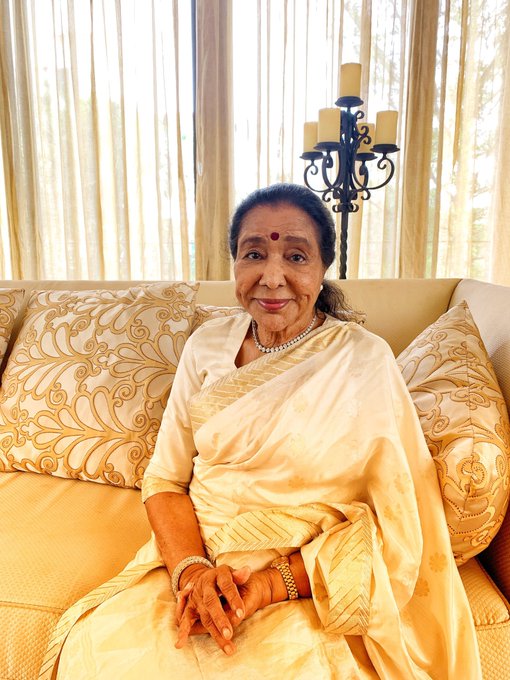
Her career, spanning nearly eight decades, reflects not just the evolution of Indian film music but also the story of resilience, reinvention, and artistic courage.
Early Life and Musical Roots
Born on 8 September 1933 in Sangli, Maharashtra, Asha Bhosle grew up in a deeply musical household. Her father, Deenanath Mangeshkar, was a respected classical vocalist and theatre performer, whose influence laid the foundation of her artistic upbringing.
After her father’s early death, the family moved to Pune and later Mumbai, where Asha was exposed to the growing world of Indian cinema. Music was not just a passion in the household—it was a survival path. Alongside her siblings, especially her elder sister Lata Mangeshkar, Asha learned discipline, classical training, and performance ethics from an early age.
Despite this strong foundation, her journey into playback singing was not immediate or easy. The film industry already had established voices, and breaking into that space required persistence and adaptability.
Struggles Before Stardom
Asha Bhosle’s early career was marked by challenges, rejection, and limited opportunities. Unlike many contemporaries who found instant recognition, she often received minor assignments in films, mostly supporting or chorus-based singing roles.
Her personal life also added complexity. Married at a young age to Ganpatrao Bhosle, she faced emotional and social difficulties that eventually led to separation. As a single mother, she carried the dual responsibility of raising children and building a career in a highly competitive industry.
Yet, these struggles shaped her emotional depth as a performer. They gave her voice a sense of lived experience that later became one of her strongest artistic assets.
The Rise of a Distinct Voice
The turning point in Asha Bhosle’s career came when music directors began recognizing her ability to adapt beyond traditional playback norms. Unlike many singers who were confined to a single vocal identity, she could transform her voice to match any character, emotion, or genre.
Her singing style became known for its flexibility—she could sound playful in cabaret numbers, soulful in ghazals, powerful in classical compositions, and expressive in romantic melodies.
By the 1960s, she had firmly established herself in the Hindi film industry. But her true golden phase was still ahead.
The R.D. Burman Revolution
One of the most defining partnerships of her career was with composer R.D. Burman. Together, they redefined the language of Indian film music.
Their collaboration brought a new energy to Bollywood soundtracks—blending Western jazz, disco, and rock elements with Indian classical and folk traditions. Songs like “Piya Tu Ab To Aaja” and “Dum Maro Dum” became cultural milestones, symbolizing a shift in musical expression during the 1970s.
This partnership also showcased Asha’s fearless experimentation. She was not afraid to adopt unconventional vocal techniques, sensual tones, or playful expressions—qualities that made her stand out from her contemporaries.
A Voice Across Genres and Generations
Throughout her career, Asha Bhosle recorded thousands of songs in multiple Indian languages. According to industry estimates and reports, she recorded over 11,000 to 12,000 tracks, making her one of the most recorded artists in history .
Her versatility allowed her to move effortlessly across genres:
- Classical and semi-classical compositions
- Romantic film songs
- Qawwalis and ghazals
- Folk and devotional music
- Western-influenced pop and cabaret numbers
This ability to adapt ensured her relevance across changing musical eras, from the black-and-white film era to modern digital soundtracks.
Recognition and Global Acclaim
Asha Bhosle’s contributions were widely recognized through numerous awards and honors. She received multiple National Film Awards, several Filmfare Awards, and prestigious civilian honors including the Padma Vibhushan and the Dadasaheb Phalke Award.
In 2011, she was acknowledged by Guinness World Records as the most recorded artist in music history, cementing her legacy on a global scale.
Beyond India, she also gained international recognition through collaborations and concerts, expanding the reach of Indian music to global audiences.
Cultural Impact Beyond Music
Asha Bhosle was not just a playback singer; she was a cultural phenomenon. Her voice became an integral part of Indian cinema’s emotional identity.
Her songs shaped how audiences experienced love, heartbreak, celebration, and longing on screen. In many ways, she gave emotional vocabulary to generations of listeners.
She also appeared on television programs, live global concerts, and cultural events, often mentoring younger singers. Her presence helped bridge the gap between traditional Indian music and contemporary global soundscapes.
Influence on Future Artists
Asha Bhosle’s influence extends far beyond her recordings. Many modern singers consider her a benchmark for versatility and emotional expression.
Her willingness to experiment encouraged younger artists to break free from rigid genre boundaries. She proved that a singer could remain relevant across decades by continuously evolving.
Her legacy lives on not only through her music but also through the countless artists she inspired to explore new creative directions.
Final Years and Passing
In her later years, Asha Bhosle remained active in music, collaborations, and public appearances. Even at an advanced age, she continued to engage with new musical styles and global projects.
She passed away on 12 April 2026 in Mumbai due to age-related health complications, including respiratory issues and multi-organ failure, according to reports .
Her passing prompted nationwide mourning, with tributes pouring in from political leaders, musicians, and fans across the world. Her funeral was held with state honors, marking the end of an extraordinary musical journey.
Asha Bhosle: A Timeless Voice That Lives Beyond Generations
Asha Bhosle’s legacy is not confined to awards or numbers. It lives in the emotional connection her voice created with millions of listeners.
She broke barriers in a male-dominated industry, redefined playback singing, and proved that music could be endlessly adaptable without losing its soul.
Her journey reflects resilience, reinvention, and timeless artistry. Even after her passing, her songs continue to echo across generations, reminding the world that true legends never truly fade—they live on in every note they once sang.