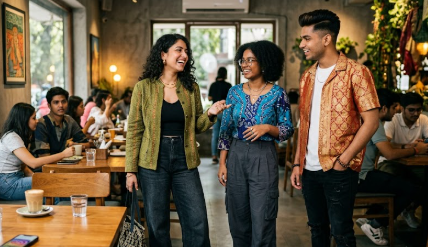
India’s rich textile traditions are finding fresh relevance among younger consumers as designers and fashion labels increasingly combine heritage crafts with contemporary silhouettes, modern accessories and sustainable design.
For Gen Z, traditional Indian textiles are no longer limited to festive or occasion wear. Handlooms, block prints, embroidery and regional weaving techniques are being incorporated into shirts, jackets, dresses, bags, scarves and everyday accessories, creating a fashion language that connects India’s craft heritage with modern lifestyles.
Craft traditions such as Bandhani, Ajrakh, Kantha, Sujani, Chanderi, Kota Doria, Ikat and Jamdani are being interpreted in new ways. Instead of reproducing traditional garments, designers are using these textiles in relaxed separates, structured jackets, contemporary dresses and functional accessories.
The appeal is particularly strong among young consumers who want clothing that feels distinctive while also carrying a story. A handwoven fabric or traditional embroidery can give a modern outfit a sense of identity without making it look overly formal or conventional.
Sustainability Meets Craft
The renewed interest in heritage textiles is also closely linked to the growing conversation around sustainable fashion. Small-batch production, natural dyes, upcycling and the use of textile remnants are becoming important approaches for designers looking to reduce waste while supporting traditional craftsmanship.
Upcycled fabrics are being transformed into cross-body bags, bucket hats, footwear details, jewellery and other lifestyle products, giving discarded or unused textiles a second life.
For artisans, this changing demand can create opportunities to take traditional skills into new markets. When heritage techniques are adapted thoughtfully for contemporary consumers, craftsmanship can remain commercially relevant while preserving regional identities.
From Traditional Weaves to Everyday Fashion
Indian textiles are also becoming easier to style across different occasions. A handloom scarf can be paired with everyday Western clothing, while an embroidered jacket can work with denim or a contemporary dress. Traditional fabrics are increasingly being treated as versatile design materials rather than being restricted to ethnic wardrobes.
This mix-and-match approach reflects a wider change in Gen Z fashion. Young consumers are increasingly interested in individuality, cultural connection and conscious consumption, rather than simply purchasing whatever trend is popular at the moment.
The shift is also creating space for independent designers and homegrown brands that work directly with craft communities and experiment with regional textiles.
A New Future for Indian Textiles
The renewed interest in traditional textiles suggests that India’s craft heritage can have a strong place in the future of fashion. The challenge for designers is to modernise these traditions without losing their authenticity or the knowledge of the artisans behind them.
As Gen Z embraces fashion that combines heritage, comfort, creativity and sustainability, Indian textiles are moving beyond their traditional boundaries.
The result is a new design movement where centuries-old craftsmanship meets contemporary living—giving traditional Indian textiles a fresh identity for a new generation.