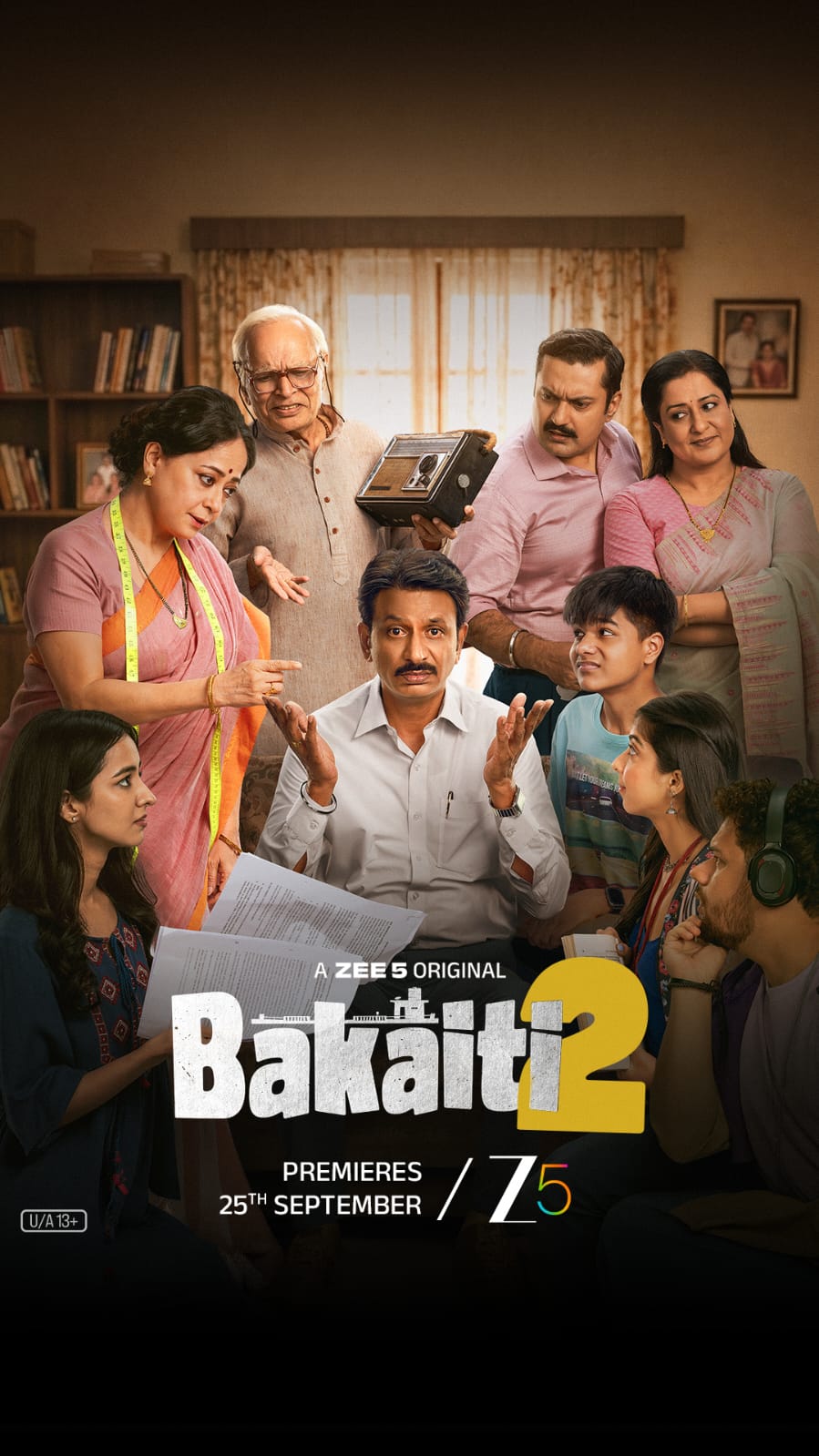
1. Bakaiti works because the family chaos feels extremely real. How did you create that lived-in Kataria family dynamic without making it feel overly scripted?
Honestly, that was the advantage of coming into Season 2. The family was already there. These actors had spent so much time together that they weren’t really ‘acting’ like the Katarias anymore; it was almost second nature. They had their own rhythm. So, my biggest fear was actually, what if I mess with that? What if I come in with all my director ideas and accidentally disturb something already beautiful? And, of course, there was another little fear, like what if they don’t accept me? So, I didn’t want to walk in and try to reinvent the family. I wanted to understand them first and then create enough space for them to just be the Katarias. Because real families don’t wait for their cue. They interrupt, talk over you, ignore you, fight about something completely irrelevant, and that, for me, is where the ‘lived-in’ comes from. The script gives them the words, but the actors already had the history.
2. At its heart, Bakaiti is a family drama, but it never feels like a conventional one. What do you believe is the show’s biggest USP?
For me, the USP is the way the story is told. Because honestly, there’s nothing extraordinary happening in Bakaiti. And I mean that as a compliment. These are the same problems you’ve seen in your own house: money, kids, parents, ego, expectations, relatives overstaying. What makes it work is that somewhere in this family, you recognize your own. There’s a little bit of your neighbor, a little bit of your bua, a little bit of your husband, your child, and, slightly uncomfortably, a little bit of you. And I think that’s where Bakaiti becomes dangerous because you come in thinking you’re laughing at this family, and somewhere along the way you realize, crap, this is my family. That recognition, for me, is the biggest USP of the show.
3. From parenting and generational conflicts to financial pressures and marital dynamics, the show touches upon very everyday issues. How important was it for you to find humour in the realities of family life?
Humor was extremely essential. We were very clear that even though Bakaiti is a family drama, we didn’t want to make the family suffer in silence because that’s not how Indian families work. Life can be falling apart, and somebody will still crack a joke at an awkward moment at a birthday celebration. Season 1 understood that well, and we wanted to carry that forward. Every problem the Katarias face has this very thin, crispy layer of humor around it. Honestly, I think humor is how most of us survive life. Fate deals you some really bad cards, you either cry about them or you make a joke and keep going, that’s what I love about the show. The problems are real, sometimes too painfully real, but the way this family deals with them is by recognizing them in a funny and messy manner. We’re not laughing at the problem, we’re laughing at the absurdity of having to live through it. I really hope in season 2 somewhere between the fight, the joke, and the chaos, the audience sees their own family.
4. What was the biggest creative challenge you faced while making Season 2 and did it change the way you approached the story or characters?
The biggest challenge was wanting to do two opposite things at the same time. I wanted to make Bakaiti bigger, but I also wanted to go deeper. Bigger in terms of the world, the scale, the locations, the conflicts, but when you come back to the character, you have to get really intimate. You have to understand what’s going on inside their head, their emotional mess, insecurities and their relationships. We had to shoot all of this at a breakneck speed but I think that’s the challenge you give yourself as a director. When you really love a show, you don’t want to choose, you want it all. My approach was pretty simple: plan, plan, and then plan some more. Because when you’re shooting at that kind of speed, you don’t have the luxury of figuring things out on the floor. The plan had to be solid, and more importantly, we had to stick to it. My entire team really stepped up, they took that pressure on and pulled it off. The scale, quality, speed, and precision with which we managed to achieve, it was a team effort.