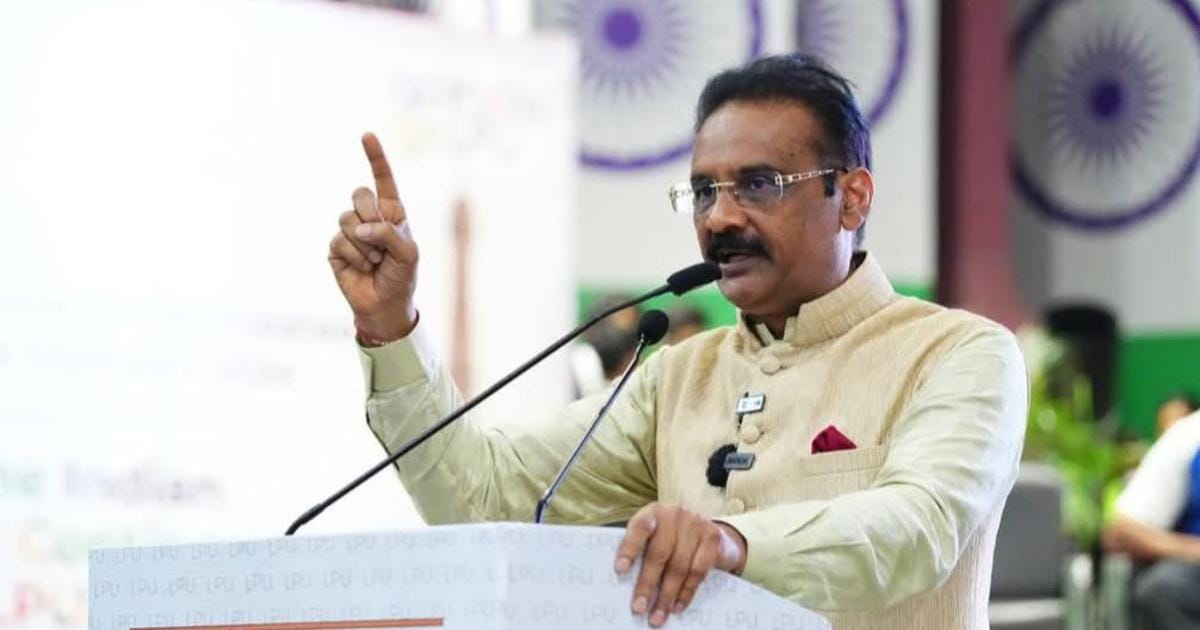
Aug 19: Dr. Ashok Kumar Mittal, Rajya Sabha MP and Founder-Chancellor of Lovely Professional University, has been elected by 245 Members of Parliament (Rajya Sabha) as a member of the governing body of the All India Institute of Medical Sciences (AIIMS), Bathinda. He is among the Rajya Sabha members recently elected to the governing bodies of various AIIMS institutions across the country. The election to AIIMS Bathinda adds an important institutional responsibility to Dr. Mittal’s parliamentary role and places him within the governance framework of a key public healthcare and medical education institution in Punjab.
AIIMS Bathinda has an important role in strengthening the healthcare and medical education infrastructure of Punjab and the wider region. As an institution combining patient care, medical education and research, its continued development is relevant to building greater healthcare capacity and expanding access to quality medical services.
Institutional governance plays an important role in ensuring that premier healthcare institutions are able to effectively advance their academic, clinical and research objectives. For Punjab, strengthening medical education, healthcare capacity, research and innovation is particularly important for creating a more resilient and accessible public health ecosystem.
Speaking on his election, Dr. Ashok Kumar Mittal said, “ I am honoured to have been entrusted with this responsibility, having been elected by 245 Members of the Rajya Sabha. This appointment holds special significance for me: I was previously nominated by the Vice President of India as a member of the School of Planning and Architecture, and of the Jawaharlal Nehru University (JNU) Court — both central institutions located in Delhi. AIIMS Bathinda, though also a central institution, is located in Bathinda, in my own home state of Punjab. ”
He added, “ The Bathinda region faces a significant health burden linked to water table issues, with cancer being the most serious of these challenges. AIIMS Bathinda, with its clinical experience, its team of doctors, and the infrastructure it is building, can make a major contribution towards addressing the cancer burden faced by the people of Punjab, and particularly by those in the Bathinda region. I am especially glad that, as a member of AIIMS Bathinda, I may be able to contribute meaningfully to the health and well-being of the people of Punjab, and I look forward to strengthening Punjab’s healthcare ecosystem. ”
He further said, “ Healthcare and education are fundamental pillars of social and economic development. As we work towards a healthier and more developed Punjab, we must continue to strengthen institutions that can deliver quality healthcare while also creating the knowledge, talent and research capabilities needed for the future. My endeavour will be to bring a constructive and public-interest-oriented perspective to this responsibility. ”
The election comes at a time when healthcare institutions are increasingly expected to integrate quality patient care with medical education, research, technology and innovation. AIIMS Bathinda can play an important role in contributing to this broader ecosystem in Punjab.
Dr. Mittal’s participation in the governing body provides an opportunity to contribute his perspective on institution-building and capacity development while supporting the larger objectives associated with medical education, healthcare accessibility, research and innovation. No specific initiatives or policy measures have been announced by Dr. Mittal in connection with his new role at this stage.
As Punjab continues to strengthen its healthcare infrastructure and human-resource capabilities, institutions such as AIIMS Bathinda will remain important to ensuring access to quality healthcare and developing a strong pipeline of medical professionals and researchers. The focus on robust institutional systems, academic excellence and public-oriented healthcare can contribute meaningfully to the state’s long-term development.