May 26 : A new report from environmental nonprofit Canopy shows that wheat straw has the potential to create high-quality, sustainable viscose and lyocell fibre for the fashion industry — reducing reliance on forest fibres, cutting air pollution, and creating new income opportunities for rural communities.
The report, called From Wheat Straw to Wardrobes: Fashioning a new fibre future, reveals the results of a pilot project that tested whether pulp made from Indian wheat straw could be used to create high-quality viscose and lyocell fibres instead of conventional wood-derived pulp.
The results show that wheat straw pulp can not only directly replace wood-based pulp in viscose and lyocell fibre production but can also create a range of yarns and fabrics that successfully meet brand performance and technical standards across multiple product applications.
Wood-derived pulp is used to create many Man-Made Cellulosic Fibres including viscose and lyocell. These materials are often positioned as more environmentally friendly alternatives to synthetic fibres such as polyester, and to cotton, due to being derived from trees. However, analysis shows that more than 300 million trees are cut down annually to create these fibres, including from some of the world’s most climate-critical and biodiversity-rich forests. Leaving these forests standing is one of the fastest and most cost-effective ways to reduce carbon emissions and support the global “30×30” biodiversity target, which aims to protect 30% of the world’s land and waters by 2030.
The pilot named Project Latvus brought together nonprofits Canopy and Fashion for Good, brands C&A, H&M Group, and Reformation, supply chain innovators and manufacturers Chempolis, TITK, Inovafil, Yee Chain, Shahi, Filpucci, and DBL traceability technology provider Textile Genesis and wheat straw supplier A2P (Agri to Power) Energy. The project was supported by Laudes Foundation and built on Spinning Future Threads, an earlier report commissioned by Laudes, which found that agricultural waste could be feasibly sourced as a raw material for textiles. By connecting stakeholders across the supply chain, Project Latvus aimed to integrate every stage of production from farm to garment to help identify and solve challenges that often slow the scale-up of new materials.
Representatives from brand Reformation and TITK noted that the fibre closely matched the look and feel of conventional lyocell while meeting performance expectations for commercial applications. Other supply chain partners also reported confidence in the fibre’s potential to scale.
Canopy, who led the project and authored the report, noted that alternative feedstocks play a critical role in diversifying the fashion industry’s fibre basket, reducing reliance on forests, and strengthening supply chain resilience. They also highlight the wider environmental and social benefits of scaling these materials, including reducing air pollution from crop burning and creating new income opportunities for rural farming communities.
In particular, the report highlights India’s potential to become a leader in the production of next-generation MMCFs, due to the country’s large supply of agricultural residue alongside circular textile to textile production systems. Estimates suggest that more than 90 million tonnes of crop residue are burned annually in India, representing a significant untapped resource that could instead be used to create low-impact fibre for textiles and other uses. Scaling this opportunity could help create new income streams for farming communities, strengthen local manufacturing capacity and support the growth of a more circular textile industry. Crop burning is also estimated to contribute to seasonal air pollution in Northern India, where levels of fine particulate matter known as PM2.5 — tiny air pollution particles that can harm human health — have in recent years measured above WHO safety guidelines.
Canopy is calling on fashion brands to support the scale-up of MMCFs that don’t rely on wood pulp, noting in the report that pooled demand will help these materials achieve price parity and scale quickly.
“Project Latvus shows that the future of fibre is already here. While continued scale-up is needed to optimize efficiency and close the price difference, the direction is clear — Next Gen MMCFs are ready for the next stage of commercial adoption,” said Nicole Rycroft, Founder and Executive Director of Canopy. “By diversifying feedstocks beyond forests, we have a real opportunity to build a more resilient, circular, and low-impact textile industry.”
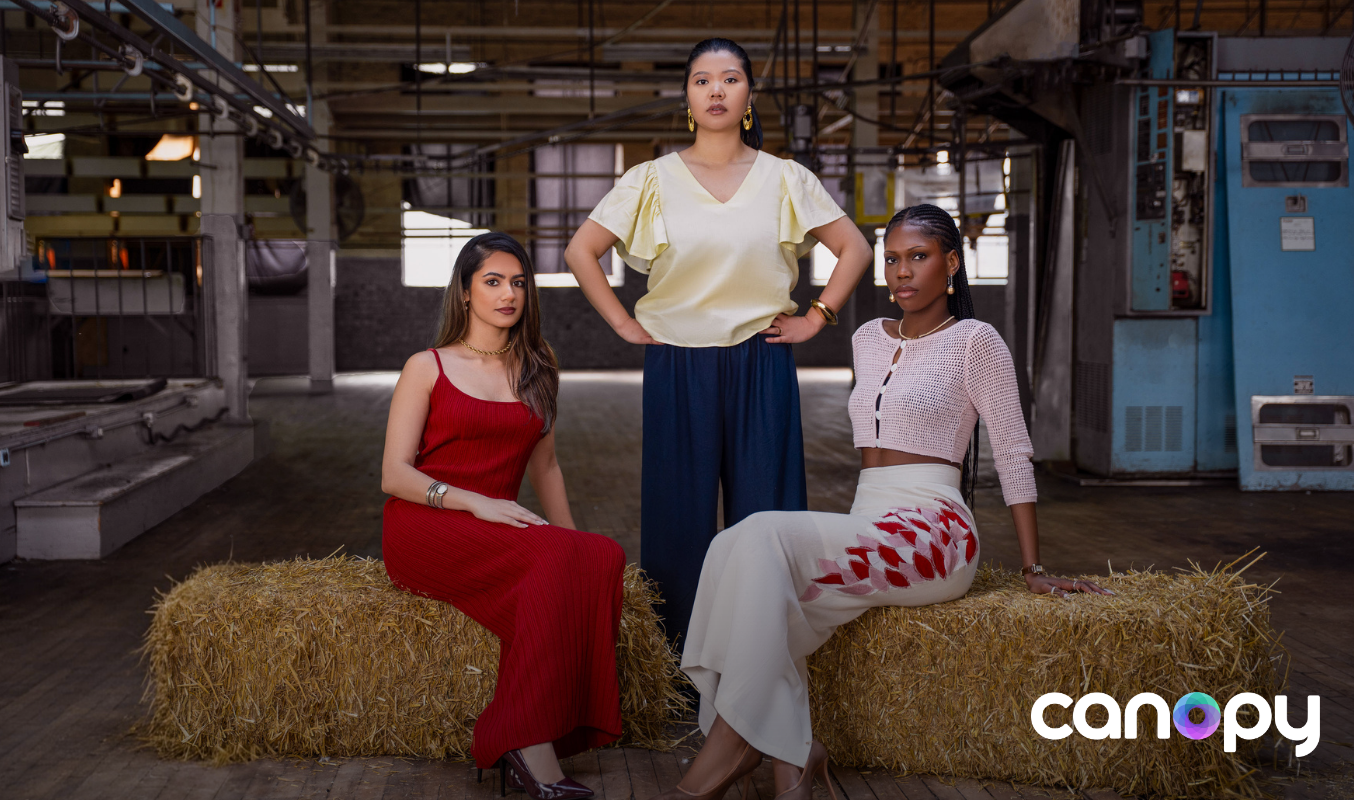
The red dress and pink cardigan are made out of wheat straw lyocell by Chempolis for Reformation.
The yellow blouse is made out of wheat straw lyocell by Chempolis for C&A.
The white skirt is made out of wheat straw lyocell by Chempolis for YeeChain.
The blue pants are made out of Refibra by Lenzing.