Bhubaneswar, Oct 23: A low-pressure system is expected to develop over the Bay of Bengal on October 23 and may intensify into a depression by October 25, bringing the possibility of unsettled weather to Odisha. Although the formation of a cyclone is not yet certain, the evolving system has renewed attention on the state’s vulnerability to tropical storms during October.
Representational Image
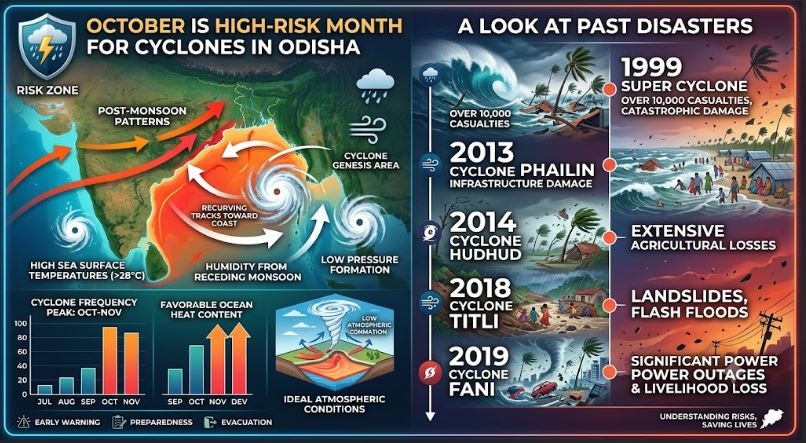
Odisha has experienced several destructive cyclones during the month, including the devastating 1999 Super Cyclone, Cyclone Phailin in 2013 and Cyclone Dana in 2024. The state’s location along the Bay of Bengal, combined with favourable atmospheric and oceanic conditions, makes the post-monsoon period particularly important for cyclone monitoring and preparedness.
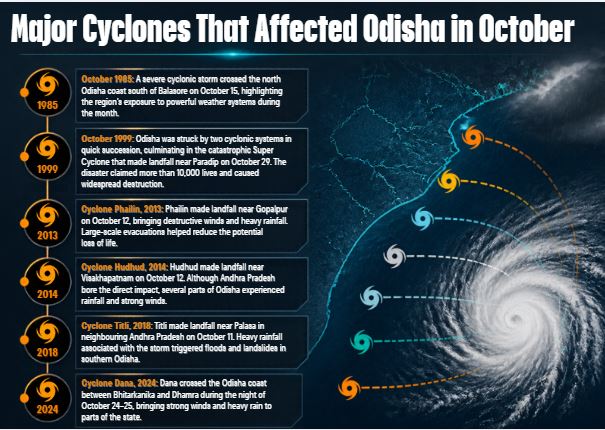
Major Cyclones That Affected Odisha in October
October 1985: A severe cyclonic storm crossed the north Odisha coast south of Balasore on October 15, highlighting the region’s exposure to powerful weather systems during the month.
October 1999: Odisha was struck by two cyclonic systems in quick succession, culminating in the catastrophic Super Cyclone that made landfall near Paradip on October 29. The disaster claimed more than 10,000 lives and caused widespread destruction.
Cyclone Phailin, 2013: Phailin made landfall near Gopalpur on October 12, bringing destructive winds and heavy rainfall. Large-scale evacuations helped reduce the potential loss of life.
Cyclone Hudhud, 2014: Hudhud made landfall near Visakhapatnam on October 12. Although Andhra Pradesh bore the direct impact, several parts of Odisha experienced rainfall and strong winds.
Cyclone Titli, 2018: Titli made landfall near Palasa in neighbouring Andhra Pradesh on October 11. Heavy rainfall associated with the storm triggered floods and landslides in southern Odisha.
Cyclone Dana, 2024: Dana crossed the Odisha coast between Bhitarkanika and Dhamra during the night of October 24–25, bringing strong winds and heavy rain to parts of the state.
These events demonstrate that Odisha can face both direct cyclone landfalls and significant weather impacts from storms that move across neighbouring coastal areas.
Why Is October Favourable for Cyclone Formation?
1. Transition from the Southwest Monsoon
October marks the transition from the southwest monsoon to the post-monsoon season. Changes in atmospheric circulation during this period can support the development of low-pressure systems over the Bay of Bengal, some of which may intensify under favourable conditions.
2. Warm Bay of Bengal Waters
The Bay of Bengal can retain substantial heat after the summer and monsoon seasons. Warm sea-surface temperatures provide moisture and energy that can help thunderstorms organise and strengthen into a tropical cyclone when other atmospheric conditions are suitable.
3. Favourable Wind Conditions
Vertical wind shear—the change in wind speed or direction with height—plays an important role in cyclone development. Relatively weak wind shear can allow thunderstorms around a developing system to remain organised, increasing the potential for intensification.
4. Odisha’s Vulnerable Coastline
Odisha’s long coastline along the Bay of Bengal exposes it to storms moving towards India’s eastern coast. Low-lying coastal areas are particularly susceptible to storm surges, heavy rainfall, flooding and damage caused by strong winds. Rivers and drainage systems can also contribute to flooding during prolonged rainfall.
Will the Latest Low-Pressure System Become a Cyclone?
The developing system may intensify into a depression by October 25, according to the forecast cited in the report. However, cyclone formation, the system’s eventual track and any potential landfall remain uncertain at this stage.
Its development will depend on evolving oceanic and atmospheric conditions. Residents should therefore avoid treating the possibility of a cyclone as a confirmed event and instead follow updated forecasts from the India Meteorological Department (IMD) and instructions issued by local authorities.
Preparedness Remains Key
Odisha’s history of October cyclones underlines the importance of timely warnings, evacuation planning and public awareness. Residents in coastal and low-lying areas should monitor official weather bulletins, keep essential supplies ready when advised and follow local administration instructions.
While October has historically been an important month for cyclone activity in the Bay of Bengal, not every low-pressure system develops into a cyclone. Accurate forecasts and timely preparedness remain essential to reducing risks to life and property.